My eldest son LOVES Powerpoint. Give him any assignment and he will try his hardest to turn it into a presentation. So we have been playing to his strengths while working on his dad’s family tree, and he has been creating some fabulous timelines – a great resource we now use a lot to visualise the lives of our ancestors, and to solve puzzles.
Time for timelines
First, we create a basic timeline of details we are sure of. These might be census entries, baptisms, civil or church records or any other document that we are fairly certain belongs to our ancestor.
Here is James Elson, Alfie’s 2x Great Grandad. James claimed his birth place as South Wales on a census return, and this was backed up by DNA evidence from my obliging husband. We had found a likely family who moved from Bedwellty, Monmouthshire to Middlesborough, Yorkshire, but our kind of family history doesn’t just stop with a single birth, marriages and a death, and we decided to try to find out as much as we could about this wandering Elson.
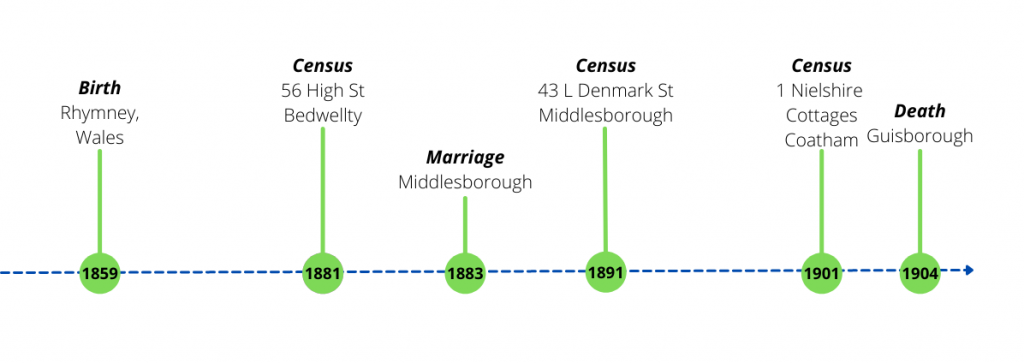
We expanded the timeline, adding in details of James’ family and other information below the line. Of course, this is an example – usually we would include more data points.
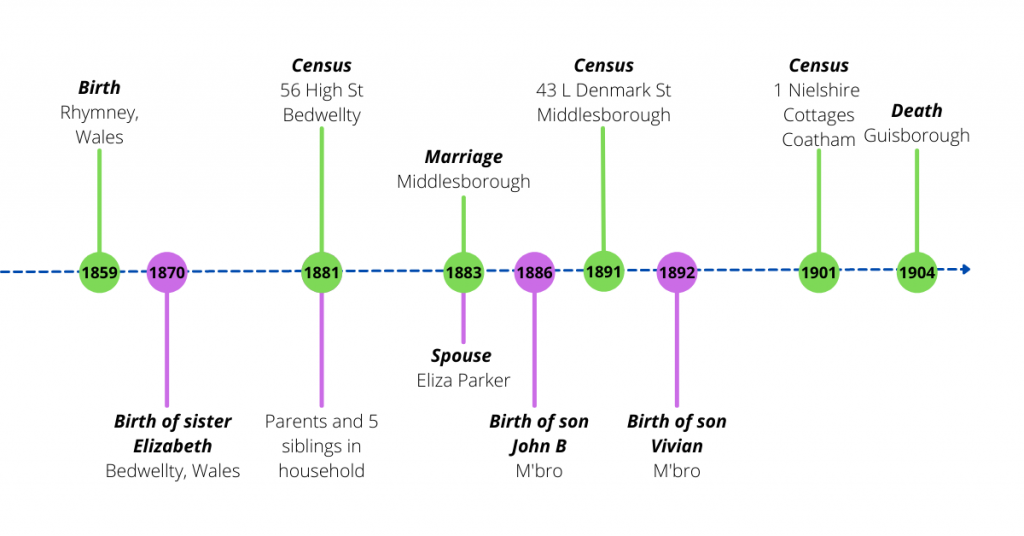
From this basic “certain” information we are able to identify both clues to why James moved over 250 miles, and where our gaps of knowledge are.
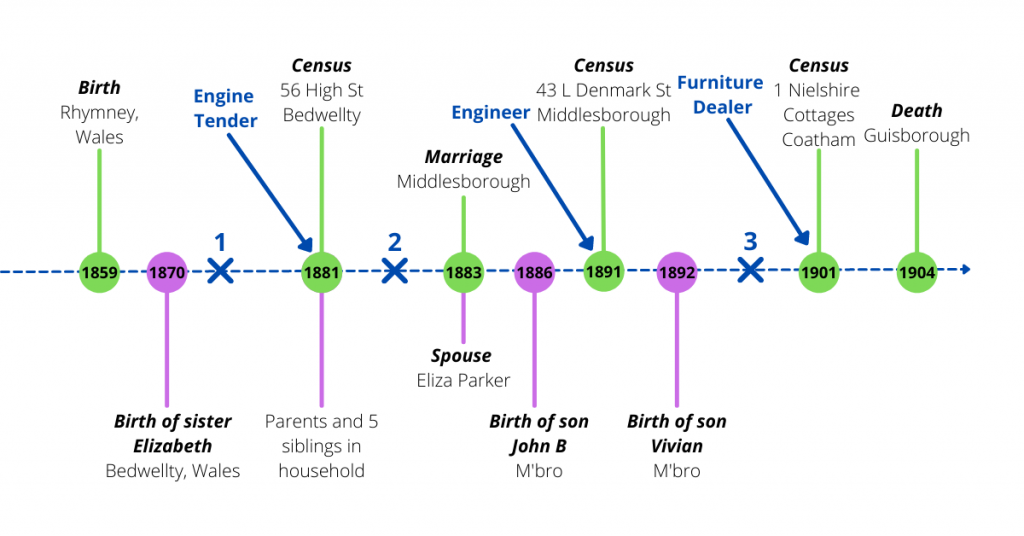
Jobs as a clue
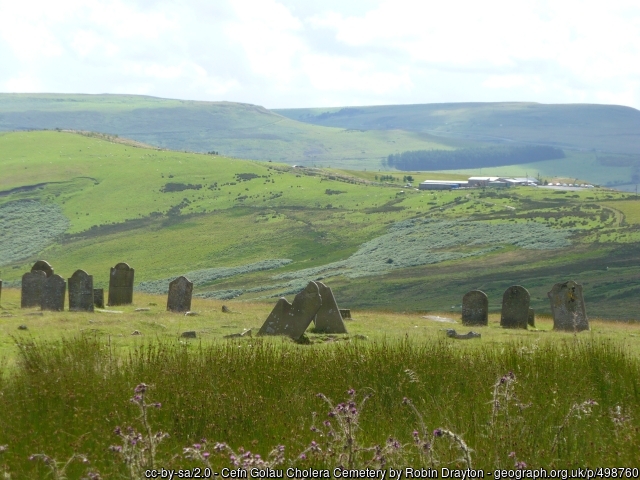
We can see that in 1881 James was an “Engine Tender” in Bedwellty. The Tredecar Iron and Coal Company had been established in the area since 1800, and by the 1880s was producing steel. However, the area was not always prosperous, and the conditions were often unpleasant with many disease outbreaks.
1875 saw the opening of Teeside Steelworks, and with it a massive employment opportunity in the North East of England which must have seemed attractive to a family used to cramped and unsanitary conditions in the valleys of South Wales.

Perhaps it was this that tempted the Elsons to relocate. Clearly James had the skills to gain employment in the industry, as by 1891 he was employed as an Engineer in the Middlesborough area.
Still a mystery remains
1901 sees James listed as “Furniture dealer” on the census. What prompted this change of employment? Did a move to the town of Coatham (Redcar) mean a new job required? Or did the move come as a result of the change of employment?
Spotting the gaps is the first step to filling them
1. Where was James in 1871?
When we created the timeline, the gaps in knowledge became evident and we need to find a census record for this gap
2. When did James move to Middlesborough?
In 1881 James was in Wales, but by 1883 he was marrying Eliza Parker in Middlesborough. A short gap, but an important one. Can we find any further records that help us discover why he moved, and when? Did his family move with him?
3. When did the family move to Coatham, Redcar?
The family would remain in the Redcar area until at least the 1940s. Can we find out when, and possibly why they moved?
Taking family history beyond the facts of life
We can now take these gaps and try to fill them, using next-level genealogical resources such as trade directories, company archives, church records or electoral rolls.
Any of these may place James geographically at particular times, while at the same time giving us extra information about his life.
Timelines are a great tool in any genealogist’s toolkit
Looking for a way to engage my son, I discovered that timelining my ancestors provides me with a way to much better understand the progression of their lives, to spot where I am missing information, and to find clues about their lives, which may have remained hidden in the documents otherwise.
