Warning – this first part is a bit waffly. Feel free to jump to the research here.
My husband recently took an Ancestry DNA test.
I wanted to do it justice on Ancestry’s site by creating a decent family tree for him and so I signed up and started work.
He soon discovered many distant relatives, and a few new close ones, and marvelled at how quickly his tree was growing (he was getting the notifications)
“Wow I added 52 people to my tree today!”
“Well yes darling, one of us did …”
I was zooming along the branches of his tree, finding more and more ancestors to link in, and making connections with all those distant DNA matches.
But it occurred to me that this was a pretty shallow experience.
Ancestry makes it really easy to create trees. By adding in a pair of grandparents with dates of birth and death it will:
- Provide you with a cascade of “hints” about records that you could attach to your ancestor, which themselves can provide more relatives for your tree

- Suggest “potential father/mother” based on other Ancestry trees, which you can select with such ease
“Of Course! Mark Anthony is BOUND to be the father of Christopher Anthony – same area, right age … why didn’t I realise before??”
Sometimes, these hints and suggestions are brilliant.
They make building a tree easy and quick, and if you are experienced enough, you can pick and choose which hints make sense, and which are nonsense.
likelihood of “my” Enoch Bradley born and bred in Nottingham claiming he was born in British Guyana and going off to fight in the US army …
In the space of a couple of months, clicking on my phone now and then, my husband’s tree has sprawled to 841 people.

But how much do I know about these people?
So little.
It’s like having the consonants and the punctuation, but none of the vowels in a sentence.
Shakespeare
ll th wrld’s stg, nd ll th mn nd wmn mrly plyrs
It kinda makes sense if you squint, but you definitely don’t get the full meaning and beauty of the thing.
Some people would argue that the basic facts, those consonants and punctuations, dates and places, are decent enough foundations for a good family tree.
I disagree.
If all you have is a lot of dates and places for a lot of people, when you do hit a problem you may struggle to solve it, because you don’t understand the players in your tree well enough.
For me, the foundation of a good tree is created by beginning with a trunk – solid, well researched people, whose lives are as open a book as they can be many years after the fact.
From there you can build connections outwards.
And even if everything is fine and dandy with a basic dates and places tree, it is for me, to be honest, boring. What about:
Why did they move?
What was it like to live a nonconformist life?
How did they afford that rent?
Where exactly did they live?
Who were their neighbours and friends?
I needed to slow down.
Too much haste to create a massive tree, and too little attention to detail. As the detail is important to me I am starting this year as I mean to go on, picking a direct ancestor in my husband’s tree and deep-dive researching him as much as I can, before moving on and adding 27 more cousins …
John Burniston (1859-1925)
John Burniston is my husband’s 2x great grandfather. His daughter Hannah married Sylvester Francis Thomas Wilson in 1922, and their son David, my husband’s grandfather, was born in 1924.
Ancestry hints provided me with John’s approximate birthdate, parents (Thomas Burniston, variously fishmonger, foundry labourer and general dealer, and his wife Sarah Hart) and thirteen siblings, as well as his location in the censuses and his death in 1925.
Hint: the 1911 census
The 1911 census Ancestry hint added John’s residence as “Redcar, England”. It also added several of his children to the tree.
Taking a closer look at the census image revealed 15 people living at 1 Smith Street, Redcar, including three grandchildren and a daughter in law (who are not added by the hint facility).
Fifteen!!
John himself was a donkey driver, but at the time of the census he wasn’t working.
Three of his sons were working as slag brick workers at Warrenby Iron Works (no longer there, but the steelworks below give an idea of the Redcar landscape), and two were General Dealers, including 16 year old David, impressively working “on his own account” at a young age.
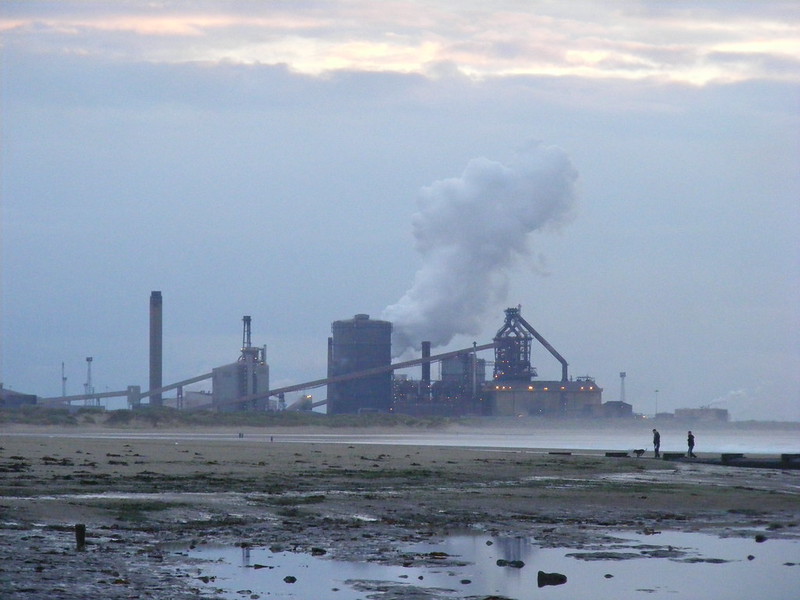
Such a busy family
(and much more detail than the quick hint-based tree building gave me)
Hints: More censuses
Sticking with the census records, I can track John and his family back in time, and add colour to their lives. Each time, I take the hint and expand it by looking at the image, and considering wider ideas such as the neighbours, the neighbourhood, local industry.
1901
In 1901 John was living at 8 Smith Street, and was a general cartman. His niece Hannah was lodging at no. 7, and his son at no. 5. John’s older brother Thomas is head of household at no. 2, and another, younger Thomas Burniston is boarding one door away at no. 3.
A whole street of Burnistons! Can we deduce from this that the family was wealthy enough that their grown children could afford to live out, rather than squeezing into their parents house as we saw in 1911? Or perhaps not (see later …)
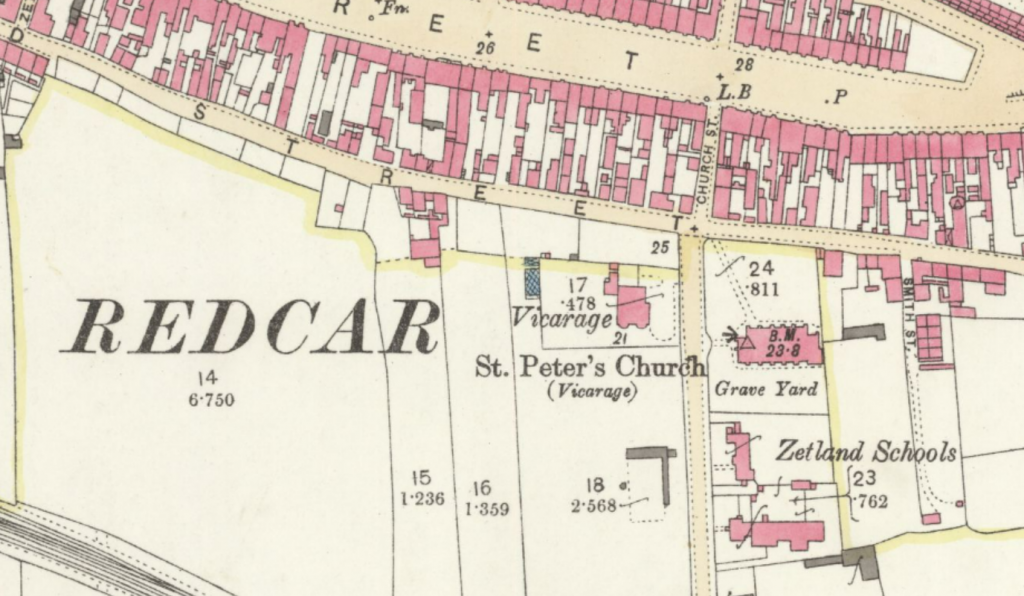
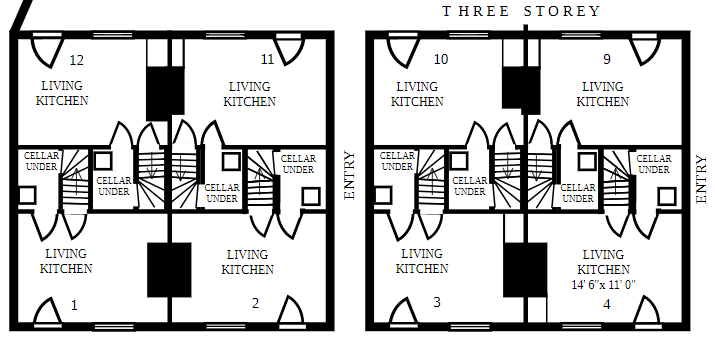
Smith Street is today called William Street, and the houses are more modern. But it looks from this map of that there was a block of back-to-backs on the street, and a couple of larger houses. Back-to-backs are now banned as new builds, although there are still plenty around in the UK. The presence of a single “living kitchen” per house in this diagram will give you an idea about how small these houses generally were.
1891
1891 sees John at no. 9 Smith Street, working as a General Store Dealer. Four of the houses in the street have Burniston families living in them, and reading the neighbours gives us an idea that this was an area of Redcar populated by hawkers, general dealers, labourers and carters.
1881
The hints cannot tell me where John was for the census in 1881. To be fair, neither can my own research (yet)
The civil marriage registration index however, tells me that John married Mary Ann Welsh in July 1881, and Find My Past records confirm that the marriage took place on July 4, 1881 at St Peters, Redcar. Two minutes walk from Smith Street, handy.
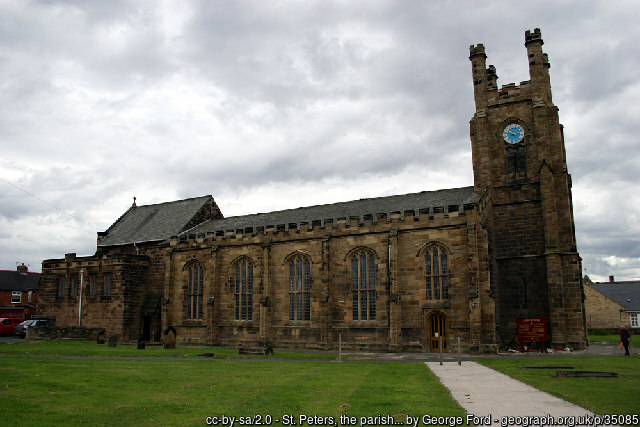
No help to find John in March 1881, but a negative is just as important as a positive, and in this case, confirming the marriage date allows me to not waste time searching for him with his wife in the census.
1871
1871 John is living at no. 5 Smith Street with his parents Thomas (a general dealer) and Sarah. They are the only Burniston family on the street at the time.
Hint: Occupation
Another Ancestry hint provided a link to the 1913 Kelly’s directory and told me that John Burniston lived at 71 Lord Street in 1913, and was a donkey owner. Lord Street was just round the corner from Smith Street, and the houses are larger, so perhaps John was moving up in the world?

Looking at the actual image I can see more than this. There are two other Burnistons listed in Redcar, George at no. 74 Lord Street, marine stores dealer, and Thomas, also a donkey owner, at 3 Smith Street.
Alas, 71 and 74 Lord Street no longer exist, although the rest of the terrace does, so Google street view can give me an idea of the kind of houses that the Burniston’s lived in. Nice and close to the beach (a short commute for a donkey owner!) and several of the houses have large entrances to the rear of the terrace for coaches and stables, so perhaps John kept his animals at his house?
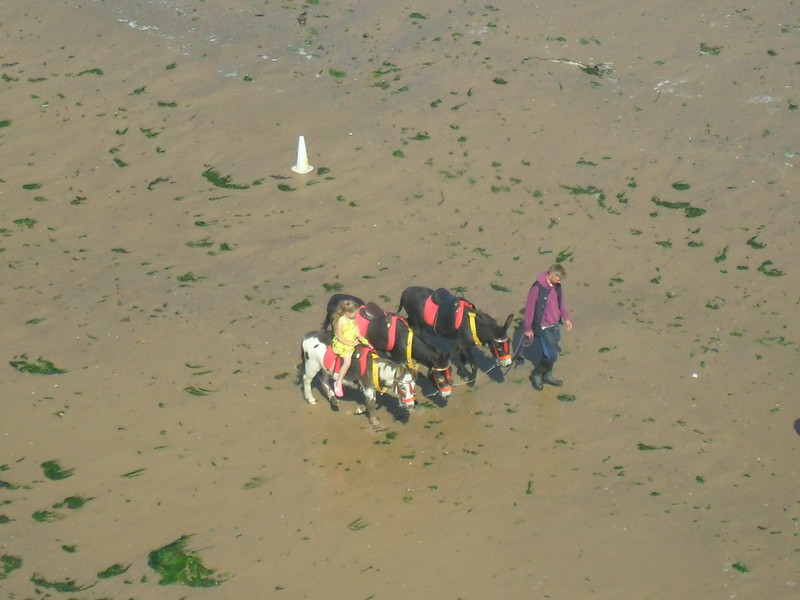
Of course, the hint also gives me two more Burnistons to investigate later. George is John’s brother. Thomas is also most likely a brother – rival donkey owners, perhaps?!
Moving beyond hints
Finally I moved away from Ancestry, and sought other resources to add to John’s profile. I discovered that he was not a good animal owner, appearing at least twice in the local newspapers being fined for cruelty.

Searching for this conviction in the North Yorks Record Office it turns out that George and Thomas Burniston were convicted a week earlier on 14th July 1885 of “permitting a pony to stand and ply for hire without a licence“. George was also convicted in the 1880s for “being the owner of a horse found straying on the highway“, “having unjust weights in his possession for use in trade” and “ill-treating a pony by causing it to be worked when it was unfit“.
Of course, these latter records pertain to John’s brothers rather than himself, but they do build up a picture of an “interesting” family.
It is also so important to keep a note of any records that you might find relevant later on and where you saw them. So many times you remember vaguely seeing that vital piece of information you need but just can’t quite remember what or where it was.
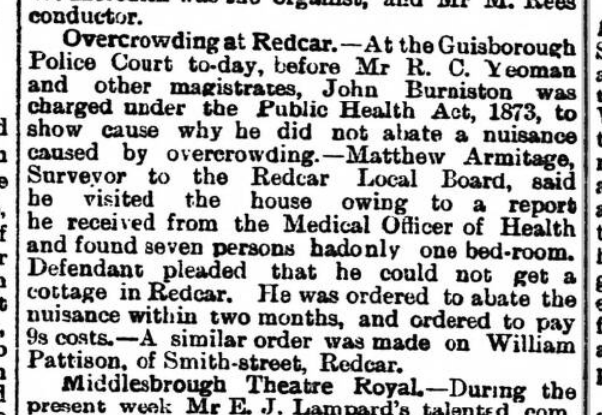
And remember those 15 people in a house in 1911? Well, John’s extended family had already caused him difficulty, as in 1896 he was charged under the Public Health Act, 1873 for overcrowding. Does this explain all the Burniston lodgers in 1901?
Conclusion
This exercise has not added many more people to my husband’s tree, but it has added a huge amount of detail to his 2x great grandfather’s life and family. I now have a number of clues that allow me to build a great picture of the life of John Burniston, as well as inevitably leading me to many more questions:
- The large Burniston families were close knit, with grandchildren and adult children living together in the Smith Street/Lord Street area of Redcar. When did they begin to move further afield than this? And did any siblings leave the Redcar area?
- While some of the family had taken advantage of the burgeoning iron and steel industry in the area, many of the men were engaged in occupations typically associated with travelling families – general dealer, marine stores dealer, donkey owner. Mary Ann Welsh, John’s wife, was from an Irish travelling family. Were the Burnistons also former travellers?
- The Welsh/Welch family were intertwined with the Burnistons, with several siblings also living in the area (and getting into trouble!). This family was less settled and had only arrived in Redcar in the later 1800s. Can I use the relationships with the Burniston family to find out more about the Welsh’s?
- With this in mind, I need to look wider to find John in 1881 and consider whether he might be travelling with others at the time.
- There are still donkeys on the beach at Redcar (or there were, pre pandemic) and they are still being run by relatives of the original Burniston donkey owners. Are there advertising materials or other information about this occupation that I can find out?

I enjoyed your post for this week re: foundations and the fleshed-out steps to learn about your ancestor(s). Ancestry is great with giving those parentage prompts, but I always look at who the people are, sometimes it’s correct and sometimes not.
Thanks Anna, and sorry for the slow reply. Yes. Ancestry is the classic double-edged sword – it can be a really useful tool, far more than I expected when I signed up, but there are many ways in which it can really muck up your research if you don’t pay attention!