My favourite find for #52Ancestors could be the name of my great grandmother’s father, or the 40 page probate packet of an estate in 18th century Massachusetts, or the photo of my great great grandfather that to my eyes is basically my dad with massive sideburns.
But actually, my favourite genealogy find is a signature in a book.
Mostly unrelated to my own family history, and only tangentially related to my one-name study.
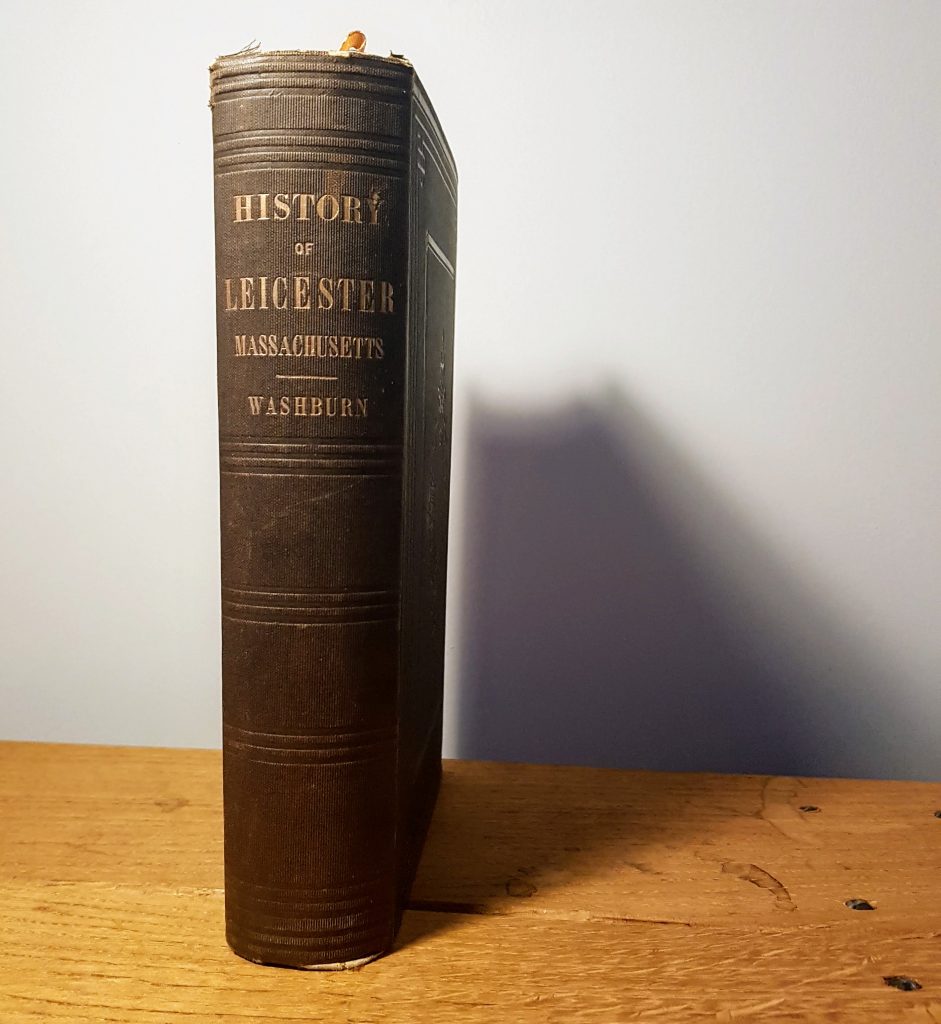
Purchased when I was fed up with reading on screens, this book turned out to be so much more than a 19th century history of an American town.
I love signatures.
When I was 18, I queued up for hours in Borders bookshop in York to get a copy of the Last Continent by Terry Pratchett signed for my then boyfriend (now husband).
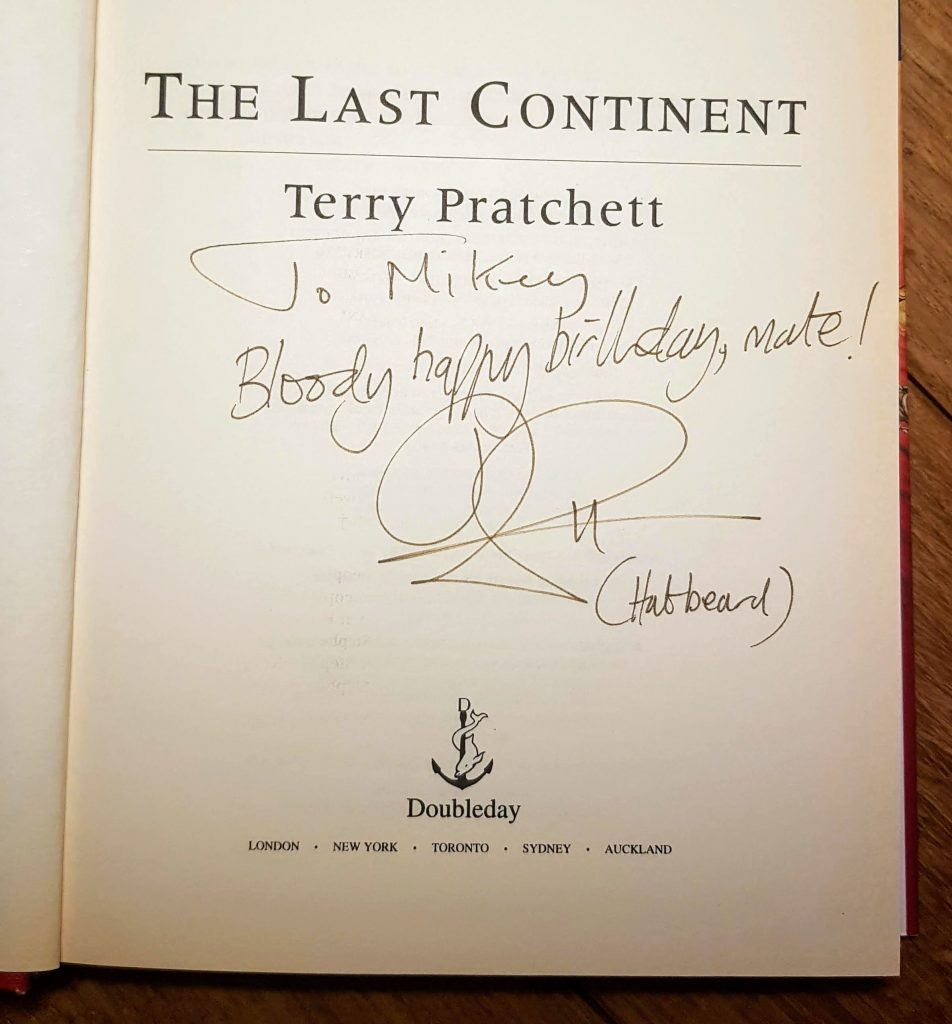
I got him to write his name as “Terry Pratchett (hat beard)”.
In a very studenty way, our group of friends regularly wandered round the city, looking for the ‘perfect’ combination of pipe, hat and beard on a gentleman. When spotted, we would then politely accost the bearer of said cranial accoutrements to congratulate them on their suavity. Ah, the folly of youth!
Portrait of a young autograph hunter
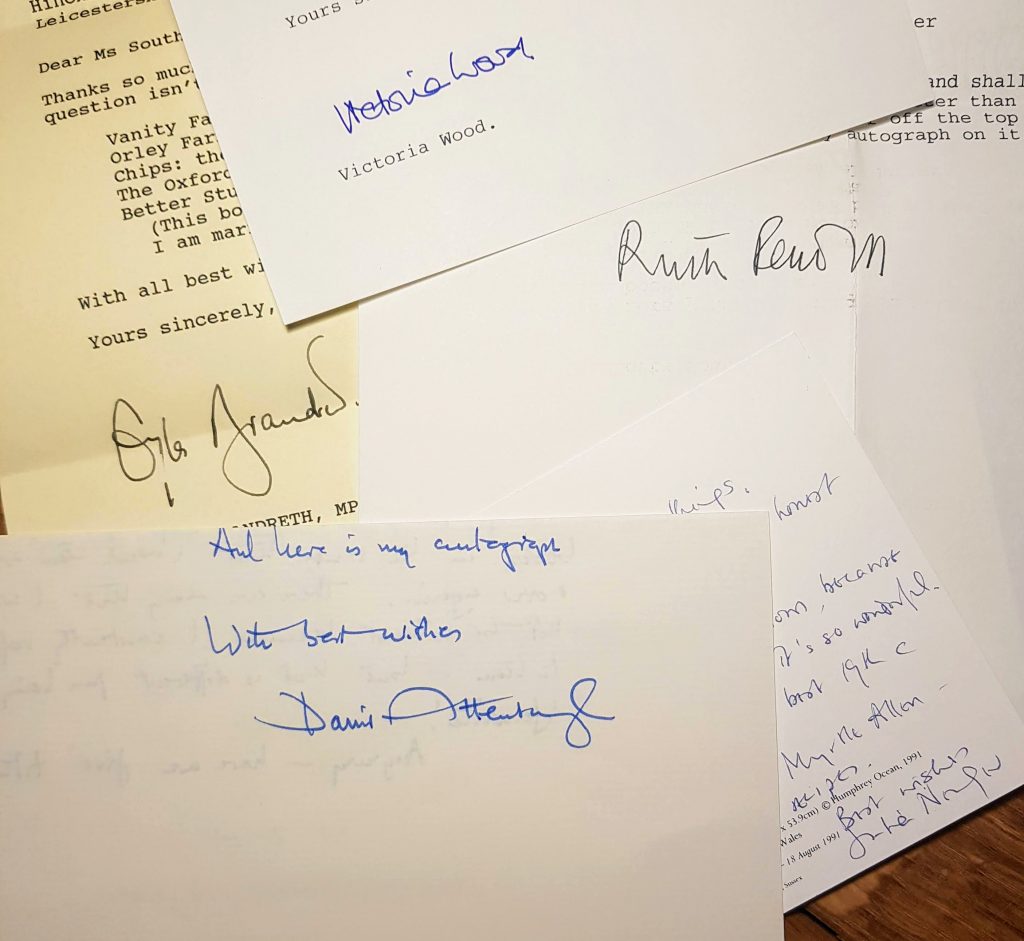
I have a small collection of notables’ signatures, mostly from my childhood when famous people were more willing to write back to enthusiastic kids, and celebrities didn’t charge large sums of money for their autograph (or selfie!).
For a school project I once wrote to an eclectic selection of famous people, with addresses pulled from the school library’s copy of Who’s Who.
They wrote back! So thrilling!
Signatures in Genealogy
Signatures can often be the only trace left behind by distant ancestors, on a will, or a marriage entry. Famously, the only undisputed examples of Shakespeare’s handwriting exist in the form of his signature on six legal documents.
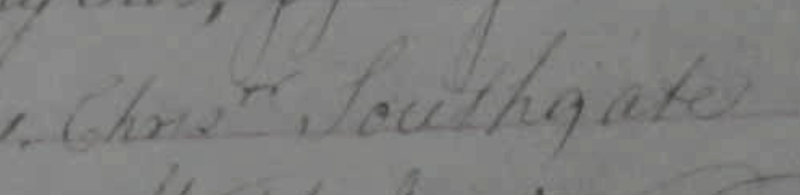
When your ancestors’ lives overlap, and they do that thing when they name their children after themselves, picking out who is who can be tricky, particularly before census records.
Finding examples of handwriting can in some cases provide the clue you need to separate the Johns from the Jnos and the Samuels from the Sams.
Definitely Christopher Southgate the elder 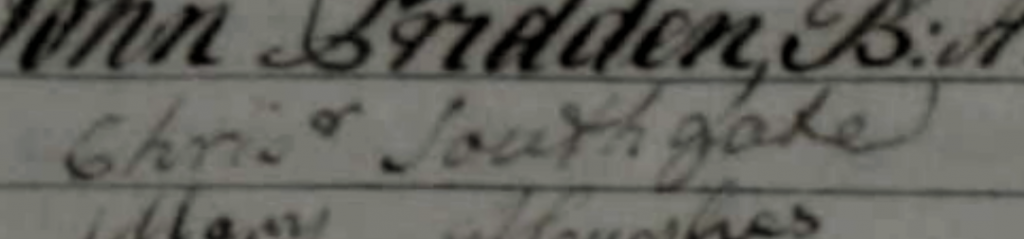
Probably Christopher Southgate the elder 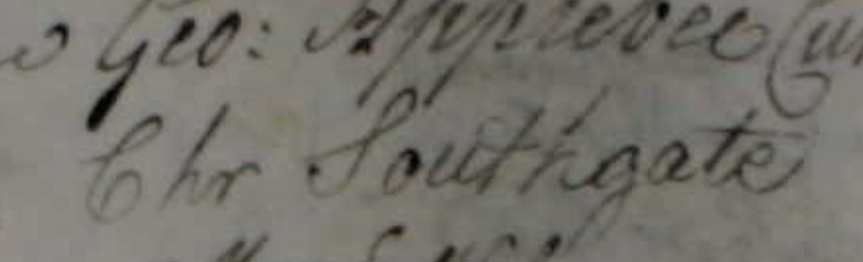
Christopher Southgate the elder? Or his son, Christopher?
But back to my book
There were two groups of 18th century Southgate immigrants to America. One family (from Huntingdonshire) worked the transatlantic trade routes between London and Virginia. The other left Suffolk, England in search of religious freedom in New England.
This second group settled in Leicester, Massachusetts. Leicester, MA has always interested me, not least because I grew up near Leicester, UK.
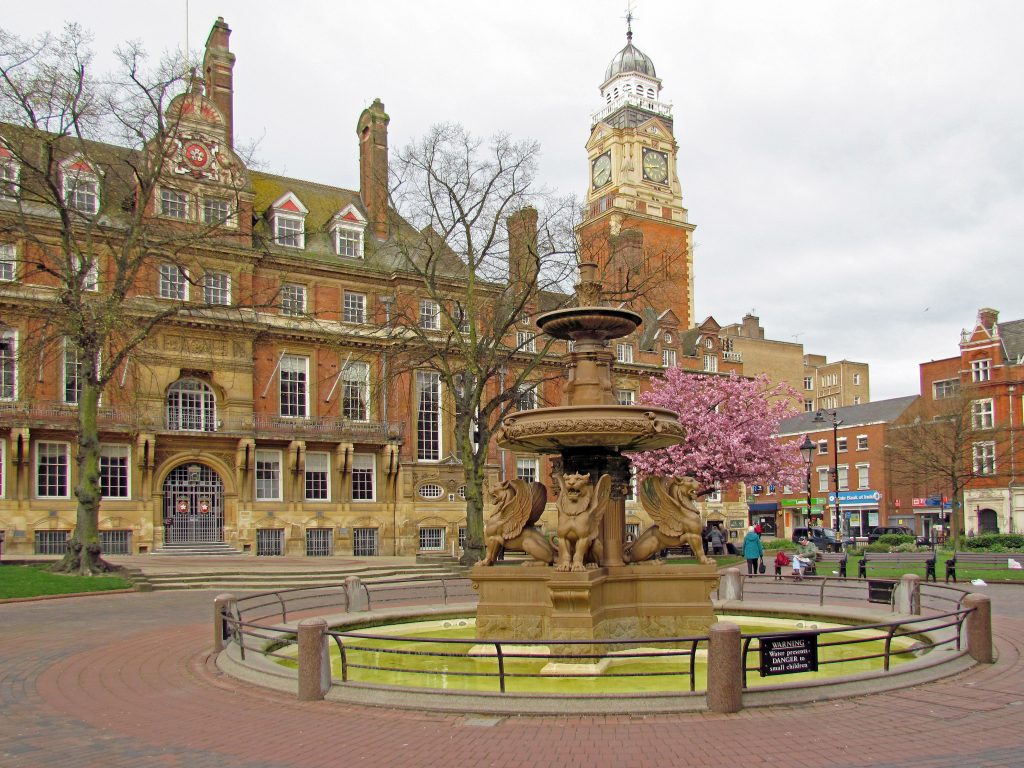
Leicester Town Hall 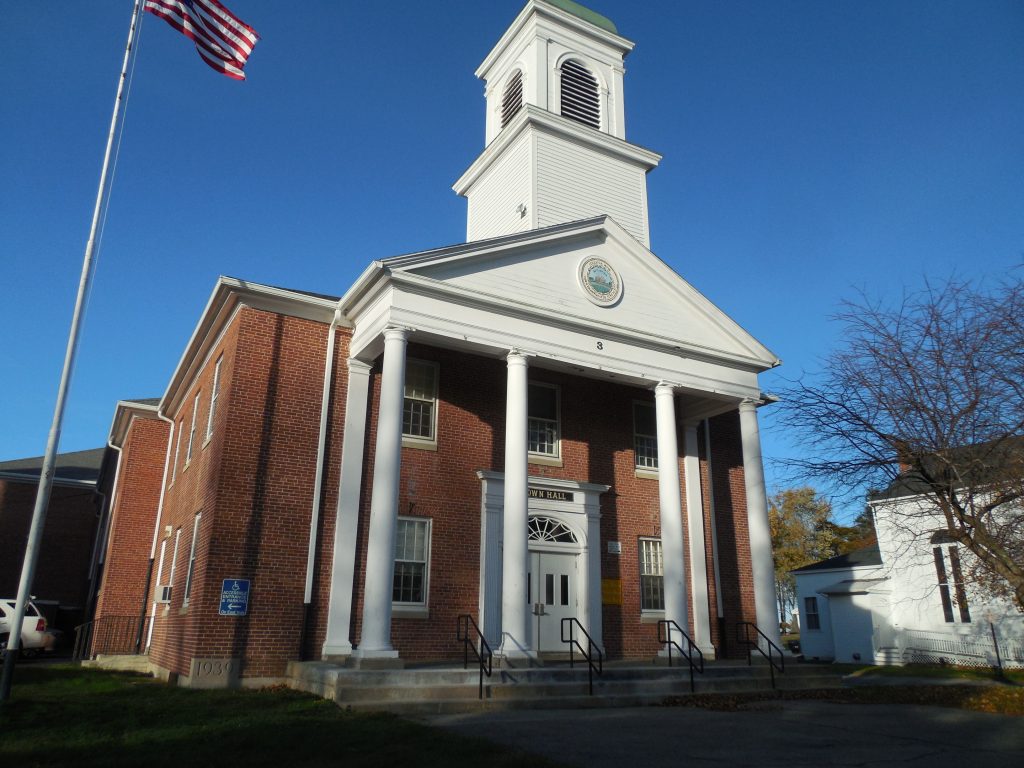
Leicester Town Hall
Handily, many 19th century Americans were keen local historians, and there are plenty of town-specific history books, including Historical Sketches of the Town of Leicester, Massachusetts, during the first century from its settlement by Emory Washburn. 1860.
As with many out-of-copyright texts, it is easy to find an ebook of this large tome for free. I was fed up with squinting at old books on a screen, and it is also possible to order a print-on-demand verson.
But I like the old-book smell.
I discovered a few copies of this US published book in UK secondhand bookshops, but one copy intrigued me. It claimed to be signed, and to include a relic from Leicester itself. It was also a nice clean reading copy, perfect for my small but growing genealogy library.
I treated myself.
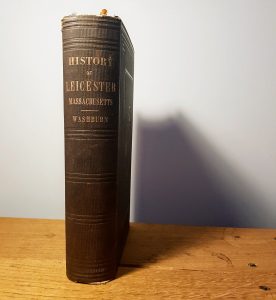
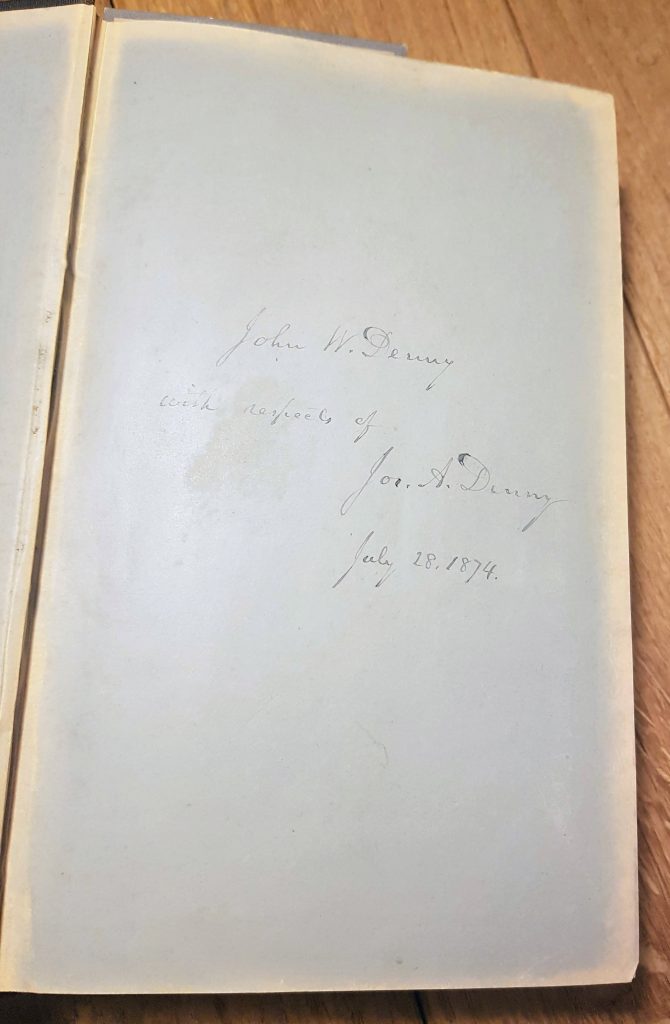
When the book arrived, it was not in fact signed by the author, but by Jos. A Denny. The inscription reads
Also taped into the book was this tiny envelope
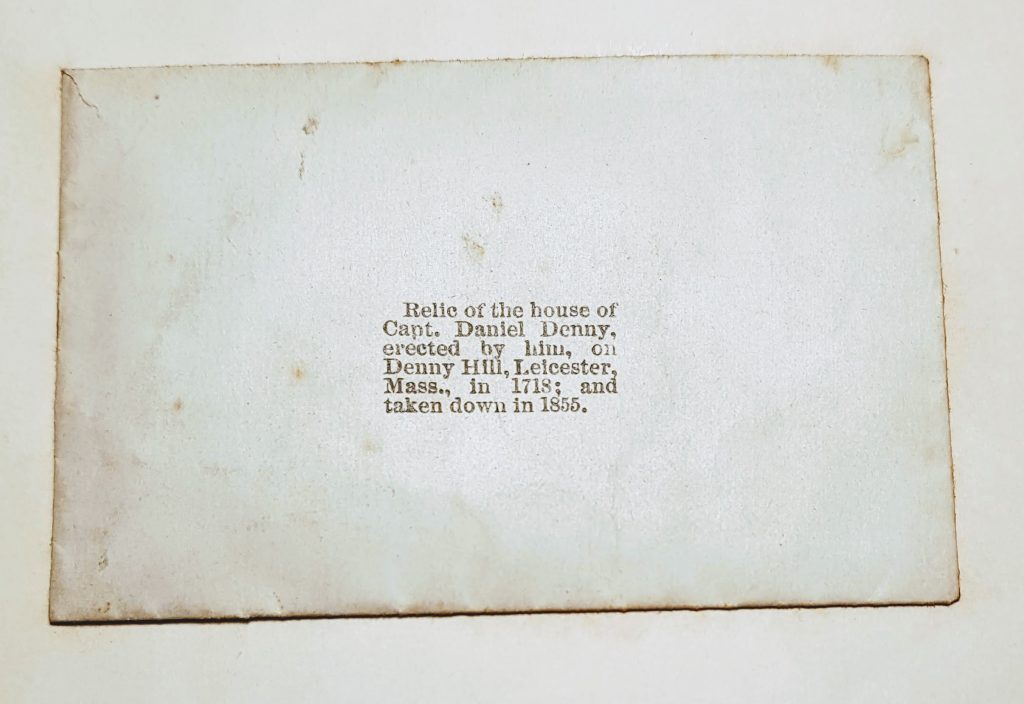
Curious.
Oh, and a Christmas card!
I had encountered the Denny family before – they had travelled with the Southgates to New England in 1717. I knew that Daniel Denny was an early settler of Leicester, MA along with Richard and James Southgate, and that the family had been wealthy and well known.
But why was one Denny giving an American book to another Denny in 1874? And how did the book come to arrive in the UK?
The answer to these questions was to be found in genealogy.
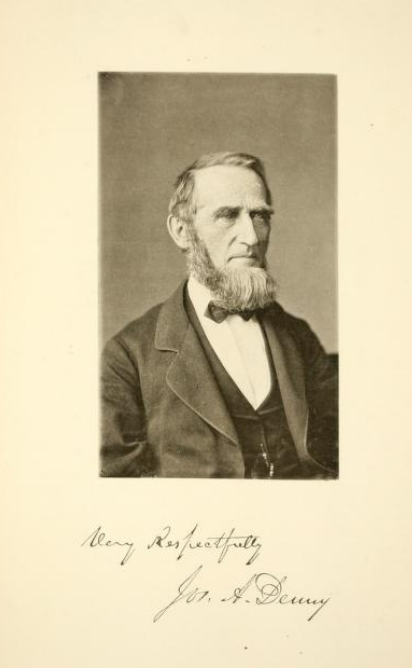
Joseph Addison Denny was born on 13th May 1804 in Leicester, Massachusetts.
His parents were Joseph Denny (1777-1822) and Phebe Henshaw (1777-1815). The couple had married in 1799, and had nine children, to whom they (very considerately for genealogists) gave slightly unusual names:
- Theodore Vernon Denny (1800-1854) m. Elizabeth McLaughlin
- Catherine Henshaw Denny (1801-1877) m. Otis Sprague
- Henry Augustus Denny (1802-1899) m. Eliza E. Sprague
- Joseph Addison Denny (1804-1875) m. Mary Davis
- Lucinda Henshaw Denny (1806-1898) m. Lucius Botsford
- Christopher Columbus Denny (1809-1810)
- Phebe Swan Denny (1810)
- Christopher Columbus Denny (1813-1895) m. Susan Brigham Rockwood, m. Anna Sophia Tyler
- Phebe Henshaw Denny (1815-1877) m. James Otis Kendall
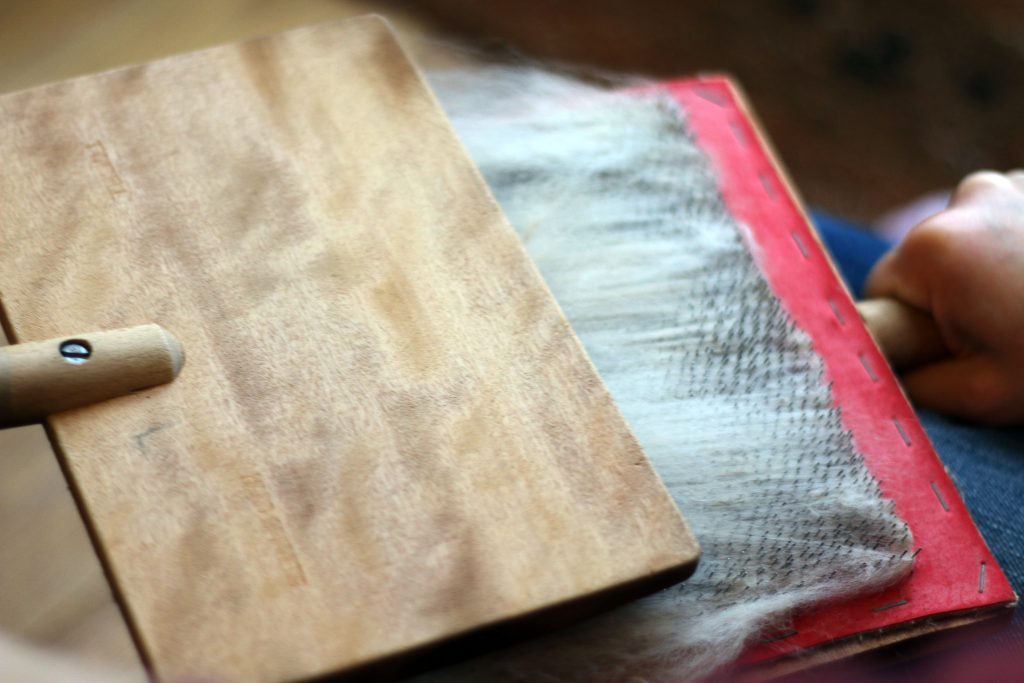
Joseph Denny was in business with Isaac Southgate, producing hand cards for the wool processing industry. He was the grandson of the aforementioned Daniel Denny.
Phoebe Henshaw was the daughter of Colonel William Henshaw (1735-1820) who is credited with coining the phrase “minuteman” and served as Adjutant General under Washington in the American Revolutionary War. Phoebe was Joseph’s first cousin. She died in 1815, and Joseph married her sister Lucinda the following year.
Joseph and Lucinda had three daughters:
- Sarah Healy Denny (1817-1838) m. Jacob Boon
- Harriet Flint Denny (1818-1904) m. Rev. Enoch D. Underwood
- Elizabeth Henshaw Denny (1821-1904) m. Hiram H. Wheelock
This information was remarkably quick to obtain (although I did check and source it independently). The reason? Joseph Addison Denny was a keen historian and genealogist, and documented his siblings’ and cousins’ lives well, as well as investigating his ancestors, as we shall see.
The Genealogy of the Denny Family in England and America, descendents of John Denny of Combs, Suffolk, England, in 1439 was published in 1886 and is a fairly comprehensive genealogy, although its author does profess that “the record is still very imperfect, and doubtless many errors may be found”.
Some of these errors may be attributed to Joseph Addison Denny’s method of organising his work
“in a drawer in his office many statistics which he had been gathering for years, names, dates of birth, marriages, deaths, &c., written on pieces of paper, on backs of letters, margins of old newspapers, or whatever he happened to find in his pockets at the time of obtaining the informaiton. These were thrown in promiscuously, lying loose in the drawer in no order of classification.”
Sounds familiar!
Joseph Addison Denny’s fascination with history extended to his home town of Leicester, Massachusetts, and he contributed to Emory Washburn’s book both a history of the Leicester Academy (of which he was trustee) and this rather fabulous map of the original parcels of land and their owners in the town, as they were in 1717.
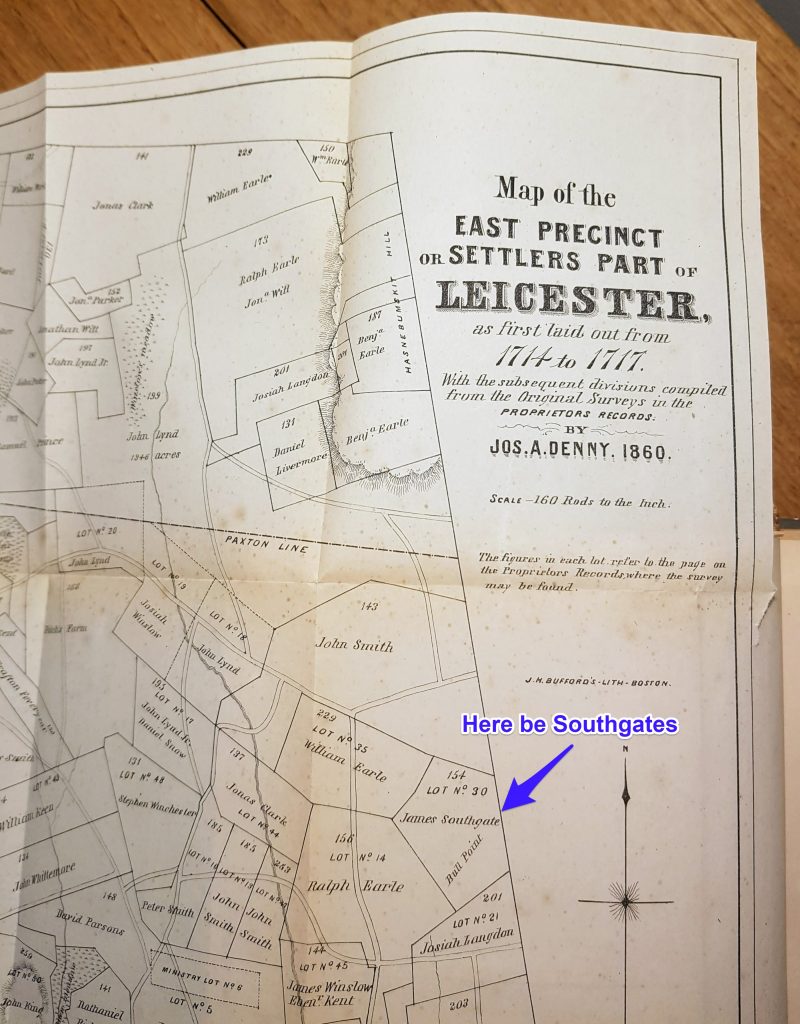
The year the book was published, Joseph Addison Denny was a cardmaker, following in his father’s footsteps and living with his wife Mary and their two children in Leicester. Joseph was possessed of significant real estate ($14,000) and personal estate ($6000).
By the time of the Massachusetts State Census of 1865, Joseph was listed as a general agent, and his son, Charles Addison Denny had married Caroline Woodcock and taken over the family business of card manufacturing.
Clearly on his way to retirement, Joseph’s thoughts turned away from the history of his hometown, and towards the history of his own family.
His brother Christopher writes that Joseph
“had long manifested a deep interest in the history of his ancestors”
and
“Mrs Grace Denny’s letters to her son Daniel, written from her home in England … induced him to pursue his investigations the other side of the Atlantic, and having ascertained that the name was still known there, he visited England in the summer of 1874”
So this is how the book might have arrived in the UK!
According to Christopher
“The result of this visit was the unearthing from old tin trunks and boxes, wills deeds and other documents, that brought to light what was before unknown to any then living, the history of the family for four centuries.”
If only all genealogy trips resulted in such a bounty!
A trip to Suffolk
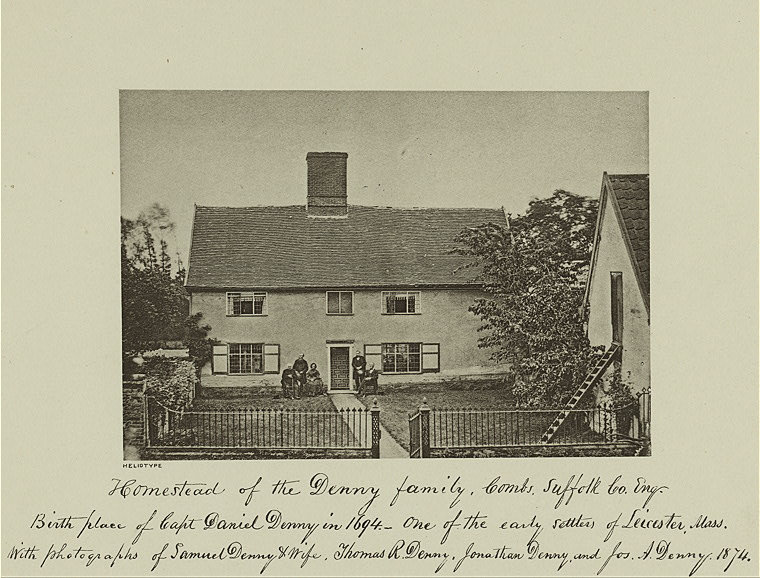
Joseph Addison Denny visited Combs, Suffolk, and the house where Daniel Denny was born in 1694. The “mansion” was still in the possession of the Denny family, and the tin trunks in the attics were to provide him with all the documentary evidence of his family’s ancestry that he could have dreamed of.
He had some photographs taken to commemorate his visit.
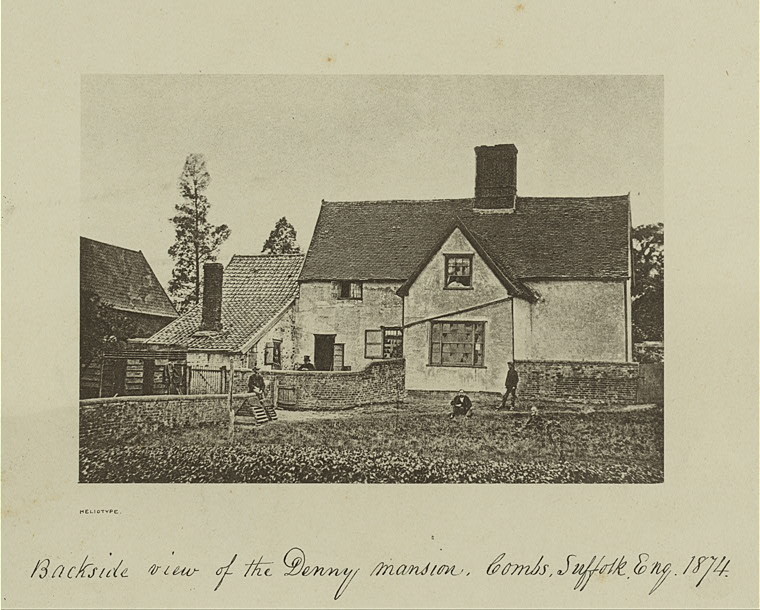
But who was the book dedicated to?
John W. Denny does not appear in these photos, nor is he living in Combs at the time of the 1871 or 1881 census.
Although Samuel Denny (1791-1883) and his wife Sarah Sparke (-1875) were living in the house at the time of the photograph, it was Samuel’s nephew, Thomas R. Denny (1816-1899) who owned it. Jonathan Denny (1828-1907) was Thomas’ brother.
Both Thomas and Jonathan were living in London in 1874 working as corn merchants.
So, could John W. Denny be in London?
Handily, the arrival of an American genealogist in Suffolk in 1874 was a significant event and warranted reporting in the newspapers.
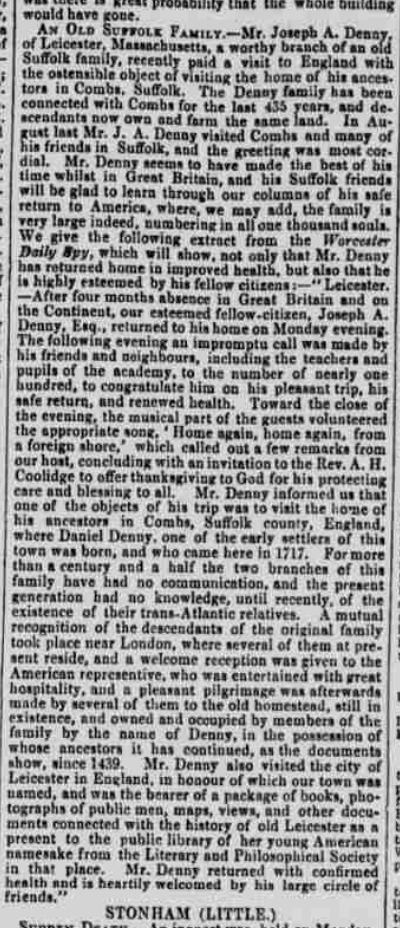
We can see that
“A mutual recognition of the descendents of the original family took place near London, where several of them at present reside”
In 1874, Thomas Reeve Denny was living in Cedar House, Lavender Hill and working at the Old Corn Exchange, Mark Lane as a Corn Factor. His wife was Ellen Smith, daughter of a wine merchant.
Cedar house was one of a matched pair of large detached houses built in the late 1700s and eventually demolished to make way for the Battersea Town Hall (now arts centre)
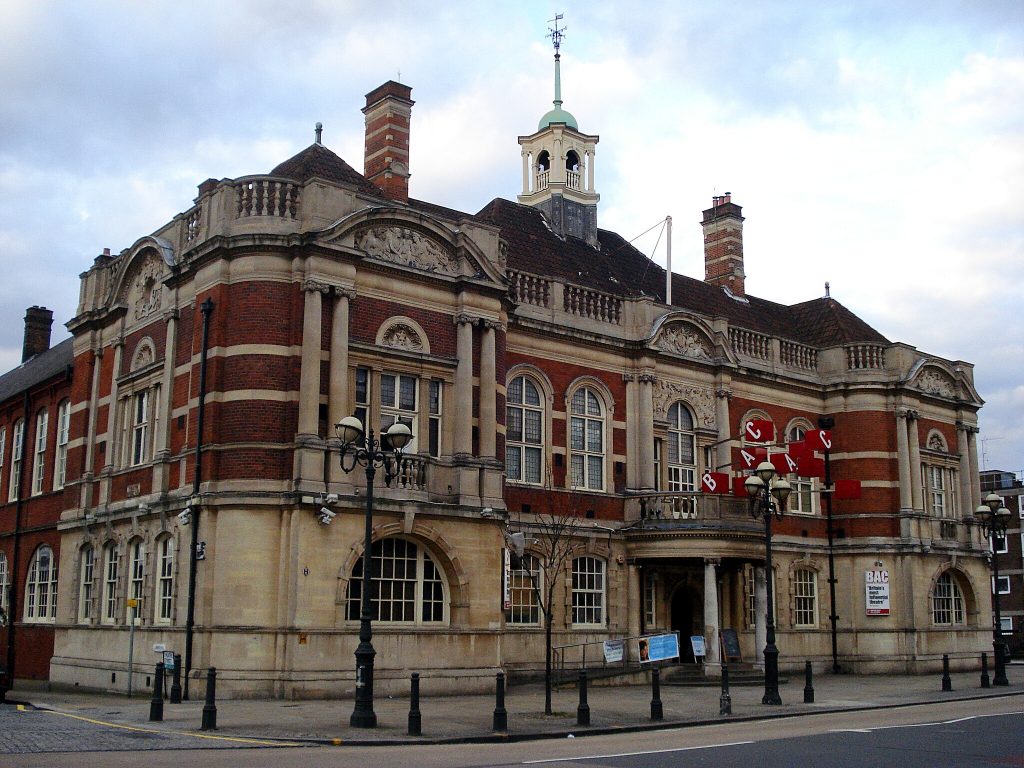
In 1871 the other of the pair, Elm House, was occupied by Nassau John Senior, and his wife Jane, Britain’s first female civil servant, and friend to many distinguished literary figures, artists, philanthropists and educators of the era.
Lavender Hill had been attracting affluent businessmen since the 18th century, and his move there from his residence in 1861, York Road, Battersea, is indicative of Thomas Reeve’s success.
In the Genealogy of the Denny Family Thomas Reeve is listed with three brothers, Jonathan (who we have already met), Charles (1822-1905), and John William (1824-1904).
Charles Denny was living in East Hill, Clapham and working as a corn merchant with his brother Jonathan at the New Corn Exchange, Mark Lane. Charles and his wife Mary Harvey had three servants in 1871.
Jonathan Denny, the youngest brother, was living just down the hill from Charles in Wandsworth with his second wife Sarah Polley. He also had a number of servants.
John William Denny, the third brother, was less than a mile away at Creek Flour Mill, next to Price’s Candle Factory on York Road, Battersea. in 1871 he gave his occupation as Miller and was living at the mill with his large family. His wife was Sarah Claxton Bridgeman.
So here we find John W. Denny. And we can place Joseph Addison Denny in London, with at least one brother, in 1874. We can imagine Joseph arriving in London and being welcomed by his cousins at a large gathering in the drawing room of a fine house in Lavender Hill.
Family members may have reminisced about their childhood visits to Suffolk, or about family still living in Combs.
Tales would have been told about the New England Southgates and their successes and descendents.
Boxes of dusty documents may have been brought out and pored over, I imagine with much eye-rolling by some.
A proposal was made and gladly accepted to take a trip to Suffolk to visit “the old place”.
Perhaps some gifts were given by a grateful genealogist
And what better gift to give if you are an enthusiastic historian, than a history book.
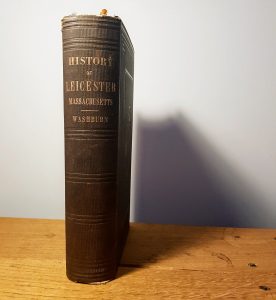
This book has led me to fascinating discoveries, not only into the Denny family on both sides of the Atlantic, but into the adventures of a genealogist, in his seventieth year, travelling across the Atlantic Ocean in pursuit of the documents that would allow him to find his great grandfather’s ancestors back in England.
And find them he did!
Postscript. A sad one.
The last line of the newspaper article above reads
“Mr Denny returned with confirmed health and is heartily welcomed by his large circle of friends”
But by the following spring, Joseph Addison Denny was dead of pneumonia. It was left to his brother, Christopher Columbus Denny, to gather and organise Joseph’s work, and to publish it in the form of the genealogy book mentioned above. Although he does say
“If I could have foreseen the amount of labor and research it required I should never have undertaken it.”
I am sure his brother appreciated the effort though!
Second postscript
While investigating the history of this book, I read the Genealogy of the Denny family, which includes masses of transcriptions from documents dating from the 1400s onwards. I sighed as I considered how many books like this exist, and how few documents remain for modern eyes to analyse.
But while searching for something else entirely, I discovered to my great delight that the Denny archive mentioned in the book still exists, and is held by the London Metropolitan Archive – this gave me great hope that I will one day find the originals of all the documents I see mentioned in published histories of my own families.
